New York City
The WhaleNew York City in Philip Hoare’s account is more than a backdrop to Herman Melville’s life: it is a commercial harbor fed by whaling, a publishing center, and a force in the imaginative making of Moby-Dick. The city’s piers connected it to distant waters and its streets brought whale products and images into everyday view. Melville’s return there after travels abroad placed his maritime experience inside a growing urban market; later, the same city became the setting for his government work, bereavements, and last years.
A maritime and commercial city
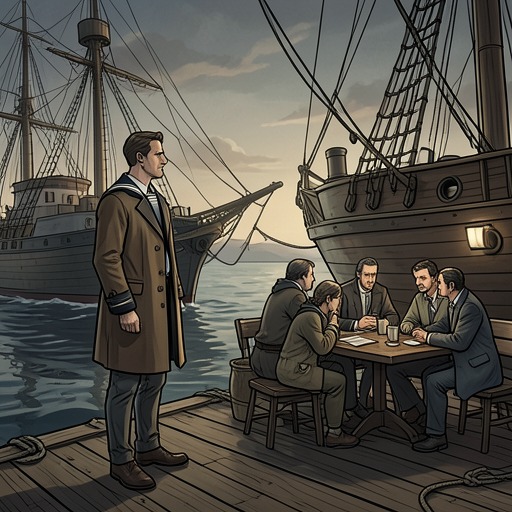
In the period Hoare describes, New York City was prosperous and bustling, challenging London’s imperial prominence. Its masts and piers extended the city’s reach overseas, while imports, exports, and the profits of whaling passed through its commercial networks. The whale was not distant from urban life: the trade made it part of the city’s economy even as its physical home remained the ocean.
That connection was visible in the streets and waterfront. Near Wall Street, where Melville’s brothers worked, Nassau Street gathered publishing and newspaper offices. Nearby stood the Astor House Hotel and the Shakespeare Tavern, associated with writers including Washington Irving and Edgar Allan Poe. Around the corner, Barnum’s American Museum advertised the whale it displayed with an enormous canvas banner. In this neighborhood, commerce, literary culture, and public spectacle occupied the same urban ground.
The city’s relation to the sea also complicates any picture of urban life as separate from wilderness. Its docks and commercial traffic depended on oceanic routes, while the whale circulated as both a resource and an object of attention. In the book’s wider account, the sea remains an enduring, poorly understood presence beside human settlements; New York’s wharves make that proximity concrete. The metropolis could imagine itself powerful and connected, but its prosperity still ran along routes it did not control completely.
Melville’s return and literary circumstances
After a brief stay in England and a short trip to the Continent, Melville sailed from Portsmouth back to New York. His hoped-for journey to the Holy Land had been curtailed when his publisher offered less money than he needed. On returning, he began a new novel, consciously turning toward commercial adventure. He described it to his English publisher, Richard Bentley, as a romance founded on wild legends from the southern sperm-whale fisheries. His sea experience thus became material for a work intended to reach a market, at a moment when the city’s wealth and cultural ambitions were expanding together.
New York was also where Melville had established a household before his English journey. After the success of Typee, he married Elizabeth Shaw and settled at 103 Fourth Avenue. He later left his young wife and baby son, Malcolm, to travel to England in 1849, hoping to sell White-Jacket and secure the means for further travel. The return to New York therefore brought him back not simply to a publishing opportunity but to the domestic life he had left behind. The account places his literary decisions within those overlapping pressures of family, travel, and income.
The city inside Moby-Dick
Hoare links the novel’s origin to the geography and public life of New York. Moby-Dick’s opening scenes begin at the quayside at the end of Pearl Street, locating its first movement in the city’s maritime threshold rather than in an abstract literary space. The waterfront gives the book a material point of departure: the city’s streets lead directly toward the whaling world that Melville had known.
New York also becomes an imaginative figure in Hoare’s reading. The city is figured as a counterpart to the White Whale, while Manhattan itself is described as whale-shaped: a landform that seems at once compelling and unsettling. The comparison makes the urban island more than a setting. It gathers the book’s opposed responses to power and possibility, attraction and apprehension. The whale that occupies Melville’s imagination can be understood through the city’s own mixture of commercial ambition, movement, and unease.
This interpretation draws a distinction between the novel’s sea-born experience and its urban making. Melville’s voyages supplied knowledge and stories, but the city supplied the crowded commercial and cultural world in which those materials could become a book. Its publishing offices, theaters of public display, and whaling profits were not incidental surroundings: they connected the subject of the novel to the conditions of its composition and circulation.
Work, loss, and late life
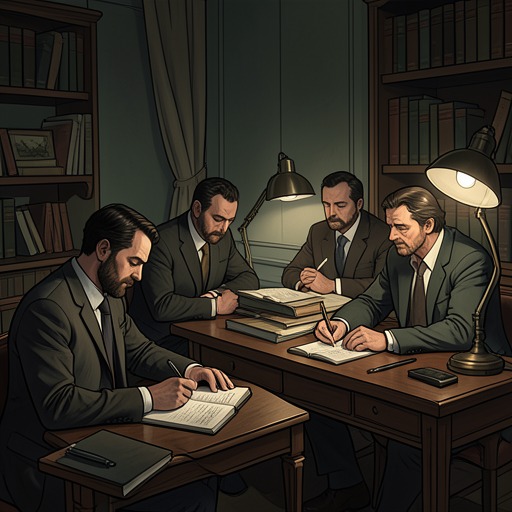
In 1863, after giving up farming at Arrowhead, Melville moved back to New York and lived in a house in Gramercy Park. His working life there was divided between a modest government post and writing. He walked down to the Battery to serve as Deputy Inspector No. 75 in the Custom Service, earning four dollars a day; in the evenings he worked in his study. The city offered an occupation and a daily route, but the account presents those routines as sharply different from the expansive maritime world that had shaped his earlier writing.
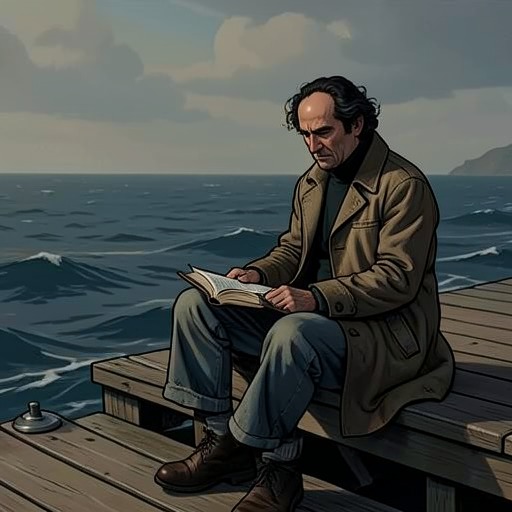
Family losses marked his years in the city. In 1866, his eighteen-year-old son Malcolm died in the upstairs bedroom of the family house. Twenty years later, Melville’s other son, Stanwix, died alone in a San Francisco hotel at thirty-four. The grief associated with these deaths belongs to the history of Melville’s urban household, although Stanwix’s death occurred far from New York. From his window, Melville saw rows of terraced houses with stone steps and iron railings; the unchanging view stood in contrast to the sea, whose appearance and force continually altered.
Melville died in Manhattan in September 1891, aged seventy-two, after a heart attack just after midnight. Thirty years had passed since his last novel, The Confidence-Man, and his later published work had been poetry. After his burial at Woodlawn Cemetery, Elizabeth Shaw Melville put the manuscript of Billy Budd, Sailor away. New York thus frames both a decisive stage in his literary life and its quiet conclusion: the city where the whaling novel took shape was also where his working years, family tragedies, and final period unfolded.
Urban setting and significance
New York City joins three scales in Hoare’s portrait: the local streets where Melville lived and worked, the commercial networks that carried whaling wealth, and the oceanic distances on which that economy depended. Details such as the Pearl Street quayside, the Nassau Street publishing offices, and the whale banner at Barnum’s American Museum show how closely literary production and maritime commerce occupied the same city. They also make the whale visible in contrasting forms—as an animal encountered at sea, a source of profit, a public exhibit, and a literary figure.
The city’s significance is therefore not simply biographical. It helps explain how Melville’s experiences could be transformed into a work that joined adventure to questions of power and uncertainty. Yet urban prosperity does not erase the sea’s otherness. New York’s reach outward through trade and shipping coexists with the limits of human mastery that the book repeatedly associates with the ocean. The city becomes both a maker of literary possibilities and a reminder that its commercial world remains bound to a force larger than itself.